Local Expertise
Tysons Corner, VA
We identify single tenant NNN retail and shopping center properties nationwide for 1031 exchange buyers. While we coordinate exchanges in Tysons Corner and surrounding areas, we can identify replacement properties in all 50 states. Our focus is on single tenant net lease assets with credit tenants, predictable income, and minimal management.
• Nationwide identification of single tenant NNN retail properties in all 50 states.
• Credit tenants handle taxes, insurance, and maintenance for hands-off ownership.
• Clear timelines covering the 45-day identification window and 180-day closing.
• Properties available in Tysons Corner, Washington DC, California, Texas, Florida, and nationwide.
24 hours a day, 7 days a week
Need help identifying replacements?
Let's talk about Tysons Corner
We synchronize the entire 1031 interchange from your relinquished property to closing.
Contact the TeamLocal Market Insight
Why Tysons Corner for Your 1031 Exchange
Strategic Location
Tysons Corner benefits from proximity to the Washington DC metropolitan area, one of the most economically resilient regions in the country. Access to major transportation corridors, a diversified employment base anchored by government and professional services, and consistent population growth make this market attractive for long-term net lease investors seeking stability through their 1031 exchange.
Diverse Property Options
Replacement property options in and around Tysons Corner span single tenant NNN retail, ground leases, essential retail anchored by national credit tenants, and drive-thru quick service restaurants. Whether you are looking for a pharmacy, dollar store, convenience store, or auto service location, the DC metro area offers a broad inventory of assets that fit within the 1031 exchange timeline.
Tax Considerations
Navigating transfer taxes across DC, Maryland, and Virginia requires local knowledge. Each jurisdiction carries different recordation and transfer tax rates that can significantly affect your closing costs. Working with a team that understands the nuances of the Tysons Corner market ensures your 1031 exchange proceeds are preserved and your replacement property selection accounts for all applicable state and local tax obligations.
Replacement Property Options
Common Property Types in Tysons Corner
Tysons Corner Market Detail
1031 Exchange Guidance for Tysons Corner
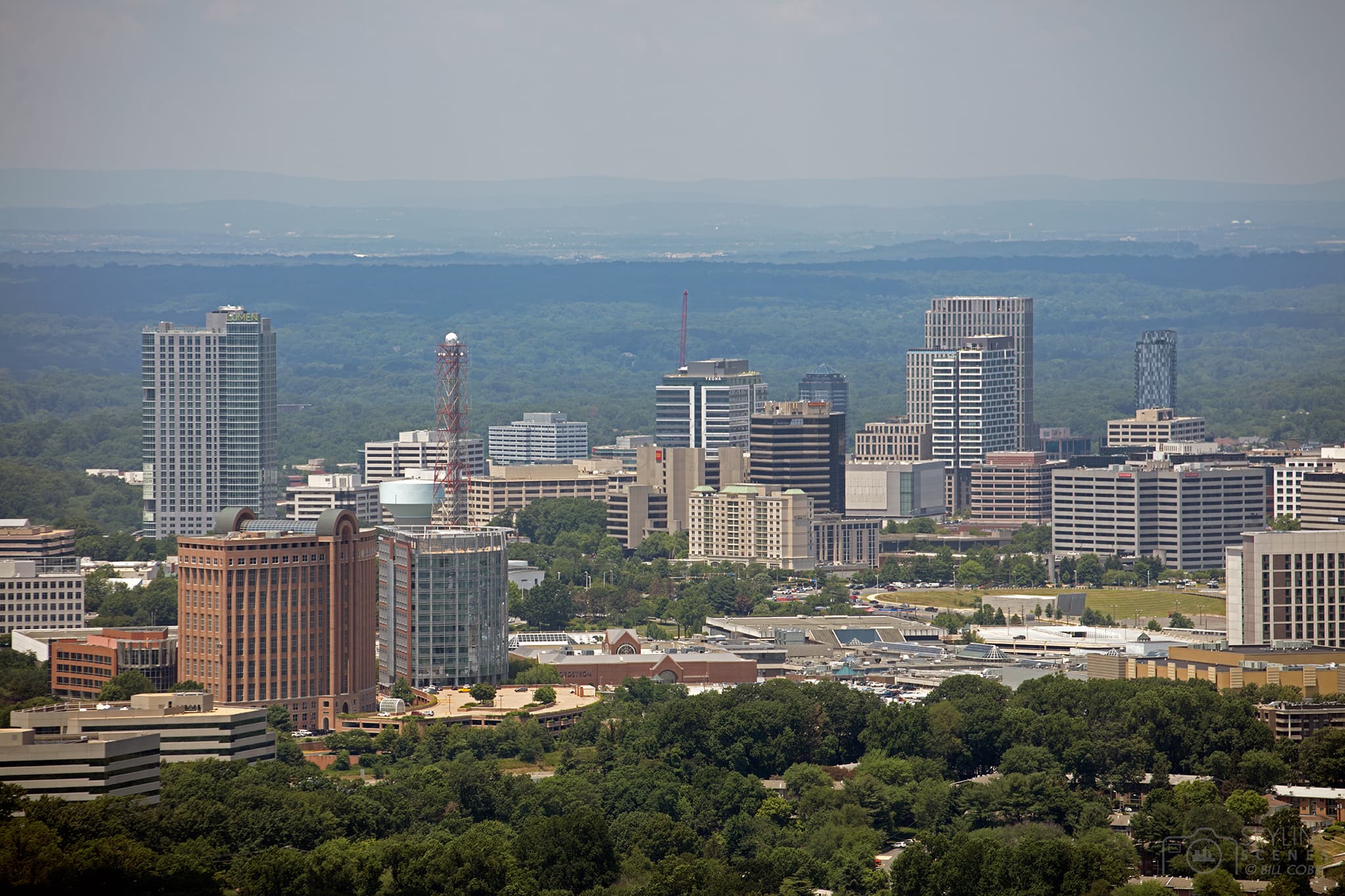
Tysons spent decades as a car-dependent edge city defined by office parks and two large regional malls, and it is now roughly halfway through a deliberate, decades-long plan to become a walkable, transit-oriented district served by several Silver Line Metro stations. A buyer identifying property here should understand that this transformation is uneven across the area, and a building's proximity to a station matters as much as its age or condition. A property two blocks from a station entrance can behave like an entirely different asset class than one a comparable distance from the nearest highway ramp instead.
Several Silver Line Stations, Different Redevelopment Stages
Tysons is served by multiple Silver Line stations, and the pace of new construction, residential towers, structured parking replacing surface lots, ground-floor retail, varies noticeably from one station area to another. A buyer should evaluate a specific station's redevelopment progress directly rather than assuming the entire Tysons area has urbanized at the same rate, since some station areas remain dominated by older office parks and surface parking while others have already added significant new density.
Corporate Office Towers and the Surface-Parking Legacy
Tysons still carries a meaningful stock of large corporate and professional-services office towers built during its original car-dependent era, many surrounded by surface parking lots that owners are now entitling for future residential or mixed-use redevelopment. A buyer considering one of these older towers should confirm whether the current owner's surface lots are entitled or merely contemplated for future development, since that distinction affects both the property's near-term parking supply and its longer-term redevelopment value. A buyer should also ask how much of the existing office tenant base has renewal options that predate the entitlement process, since a long-term renewal can delay an owner's ability to act on approved redevelopment rights.
Regional Mall Retail
Tysons Corner Center and Tysons Galleria anchor the area's retail base and continue to draw regional shoppers well beyond the immediate office and residential population, giving Tysons retail a different demand profile than a neighborhood-serving corridor elsewhere on this site. A buyer should evaluate mall-adjacent retail against regional draw and anchor tenant health rather than against local population density alone. Parking structures serving these malls also carry their own maintenance and reconfiguration costs as owners convert surface capacity to structured decks, and a buyer should confirm which party bears that cost under a specific retail lease before assuming it falls entirely to ownership.
What a Tysons Identification List Usually Includes
A realistic Tysons list typically includes:
- corporate office towers built during the area's car-dependent development era
- retail space adjacent to or connected with the area's regional malls
- newer residential towers built near a Silver Line station
- mixed-use parcels combining ground-floor retail with office or residential above
New Residential Towers Still in Lease-Up
Residential towers built as part of Tysons's transit-oriented redevelopment are, in many cases, still relatively new to the market, and a buyer should request trailing collected rent and concession history rather than relying on posted rates, similar to the diligence needed for newer buildings in NoMa or Navy Yard. Confirming how a specific tower's lease-up compares to others delivering near the same station helps separate a genuinely strong asset from one simply riding early demand for a newly opened Metro stop. A buyer should also confirm whether a tower's ground-floor retail has leased up alongside the residential units, since retail vacancy in a newly delivered building often lags the pace of apartment absorption, and a storefront that sits empty a year or more after delivery deserves a harder look than one still within its normal marketing period. That gap tends to close faster in station areas with more existing daytime office population nearby than in ones still waiting on their own office delivery.
Common Questions
Frequently Asked Questions About Tysons Corner
Has all of Tysons urbanized around its Silver Line stations at the same pace?
No. Redevelopment progress varies noticeably by station area, and some parts of Tysons still function much like the original car-dependent office park era while others have already added significant new residential and retail density.
What should a buyer check about surface parking around an older Tysons office tower?
Confirm whether the owner's surrounding surface lots are formally entitled for redevelopment or only being contemplated, since that distinction affects both near-term parking availability for existing tenants and the property's longer-term redevelopment value.
Is retail near Tysons Corner Center or Tysons Galleria a good 1031 replacement?
It can be, since these malls draw a regional customer base beyond the immediate area, but a buyer should evaluate anchor tenant health and regional draw specifically rather than judging the retail against local population density the way a neighborhood corridor would be judged.
How should a buyer underwrite a newer residential tower near a Tysons Metro station?
Request trailing collected rent and concession history rather than relying on posted rates, and compare the building's lease-up pace against others delivering near the same station to separate a genuinely strong asset from one simply riding early demand for a new stop.
How is Tysons different from Arlington's Ballston corridor for a 1031 buyer?
Tysons is a larger, still-transitioning edge city defined by regional malls and older corporate office towers, while Arlington's Ballston corridor completed its walkable, transit-oriented build-out years earlier, so a buyer should expect more redevelopment variability and surface-parking legacy issues in Tysons.
Triple Net Insight
Investors pursuing NNN leases in Tysons Corner and the wider metropolitan footprint benefit from tenants who pick up property taxes, insurance, and maintenance. That arrangement lets you treat each asset like a cash machine with a built-in property manager.
A triple net ground lease brings the same predictability while letting you own the land, capital improvements, and future upside. This is especially useful if you might accept a development-ready site in a growing suburb such as Tysons Corner.
Whether the lease is absolute or regular, the most successful triples align three factors: tenant creditworthiness, a strategic location, and a lease term that keeps rent escalations ahead of inflation. Washington DC-area tenants often tie their leases to national operators that remain resilient across cycles, so these investments become a low-touch complement to a diversified 1031 strategy.